Integrating Coding into Every Subject: Cross-Curricular Learning Opportunities
12 August 2025
Ah yes, coding—the mystical skill that was once reserved for hoodie-wearing, basement-dwelling geniuses. Now, schools are throwing it into every subject like it’s the secret sauce to educational success. But you know what? They might actually be onto something.
Let’s talk about why coding isn't just for computer geeks and why it deserves a front-row seat in every classroom. Don’t worry, this won’t be another lecture filled with boring statistics (probably).

Why Should We Bother?
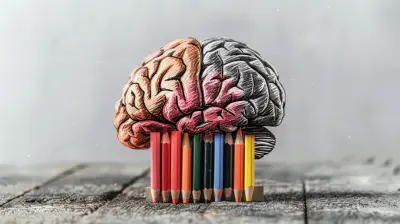
Look, we live in a world where kids can order pizza using chatbots but struggle to do mental math. Coding is no longer just a “nice-to-have”; it’s a necessity. By integrating it across subjects, we’re not just teaching a technical skill—we're teaching kids how to think.Critical thinking, problem-solving, creativity—coding has it all. Plus, let's be honest, writing a loop that automates your homework sounds way cooler than memorizing historical dates. 
Coding in Math: More Than Just Numbers
Math and coding go together like peanut butter and jelly (or pineapple and pizza, if you like controversial takes).- Algebra Meets Algorithms
Variables, functions, and equations? Yeah, that’s basically coding. Writing a simple Python equation to calculate the area of a triangle suddenly makes algebra way less painful.
- Geometry Goes Digital
Ever heard of Turtle Graphics? It’s a way to draw shapes using code. Imagine a world where students program a turtle to draw polygons instead of manually struggling with a protractor. Revolutionary.
- Statistics with a Side of Data Science
Instead of manually calculating averages, students can write a few lines of code and let a computer do the work. Welcome to the future: where math homework solves itself. 
Coding in Science: Because Experimenting is Fun
Science is all about discovery (oops, I mean finding out cool stuff). Coding just makes it faster and cooler.- Physics Simulations
Want to see Newton's Laws in action? Instead of dropping eggs off the roof (which is also fun), students can code a physics simulation. Instant results, zero mess.
- Biology & Bioinformatics
DNA sequencing? Disease modeling? Coding plays a major role in modern biology. Students can analyze real genetic data instead of just looking at textbook diagrams.
- Chemistry Meets Automation
Balancing chemical equations manually? No, thanks. Write a program to do it instead. More time for blowing things up in controlled lab environments. 
Coding in English: Wait, What?
Oh yes, even English class isn’t safe from coding. Before you roll your eyes, hear me out.- Storytelling with Code
Students can create interactive fiction using platforms like Twine. Instead of writing yet another five-paragraph essay, how about coding a choose-your-own-adventure story?
- Poetry & Procedural Generation
Ever seen AI-generated poetry? With a bit of Python, students can create their own algorithm-driven poems. Who needs Shakespeare when you have code?
- Grammar Checking with Python
Instead of waiting for a teacher to mark their essays, students can write simple programs to check for grammar mistakes. Now that’s what I call smart writing.
Coding in History: Rewriting the Past
History may be about the past, but coding can bring it into the digital age.- Historical Data Analysis
Instead of just memorizing dates, students can analyze historical trends with data visualization tools. A graph is worth a thousand words, right?
- Timelines & Interactive Maps
Imagine coding an interactive timeline of major historical events. Way better than flipping through a dusty old textbook.
- Historical Simulations
Let students write code that simulates historical battles. Watching AI-controlled armies fight it out is way more engaging than reading about them.
Coding in Art: Creativity Meets Logic
Whoever said coding isn’t creative clearly never tried digital art.- Generative Art
Write a few lines of code, and boom—instant abstract masterpiece. Platforms like Processing let students create stunning digital art with simple scripts.
- Music & Coding
With tools like Sonic Pi, students can compose music using code. Beethoven would have lost his mind if he saw this.
- Animation & Game Design
Why draw a single image when you can program an entire animated sequence? Coding allows students to create their own cartoons and video games.
Coding in PE: Yes, Even Here
Okay, this one sounds ridiculous, but stick with me.- Fitness Trackers and Data Analysis
Students can collect and analyze data on their own physical activity. Because nothing screams motivation like cold, hard data.
- Sports Simulations
Want to predict the outcome of a soccer match? Write an algorithm to analyze player stats. Now it's mathletes vs. athletes.
- Reaction Time Tests Using Code
Students can code a reaction speed test and challenge their classmates. Who needs a stopwatch when you have Python?
How Do We Actually Do This?
So, integrating coding sounds great in theory, but how do we make it happen in real classrooms without causing mass teacher panic?Start Small—And Keep It Simple
No one expects every teacher to become a coding guru overnight. Start with simple tools like Scratch or Blockly before diving into Python or JavaScript.Use What’s Already Out There
There are tons of resources, apps, and lesson plans that incorporate coding into different subjects. No need to reinvent the wheel—just tweak it for your class.Make It Fun
Nobody wants to sit through another lecture. Turn coding exercises into games, challenges, or competitions. A little friendly rivalry never hurt anyone.Support the Teachers
Let’s be real—teachers already have enough on their plates. Schools need to provide proper training and resources to make cross-curricular coding a reality.Final Thoughts: Coding or Bust
At this point, coding isn't just an "extra skill"—it's the backbone of modern problem-solving. Whether it's math, science, history, or even PE, integrating coding makes learning more interactive, engaging, and (dare I say) fun.So, are we going to keep pretending coding is just for tech nerds, or are we finally going to give it the attention it deserves? The choice is ours. But fair warning: the future won’t wait for us to catch up.
all images in this post were generated using AI tools
Category:
Coding In SchoolsAuthor:

Charlotte Rogers
Discussion
rate this article
12 comments
Idris McIntire
Integrating coding fosters critical thinking and creativity across all subjects effectively.
February 19, 2026 at 10:05 PM
Charlotte Rogers
Thank you! I completely agree—integrating coding not only enhances critical thinking but also inspires creative problem-solving in every subject.
Zaylee Black
Integrating coding across subjects fosters critical thinking and problem-solving skills, making learning more engaging. By connecting technology with various disciplines, educators can enhance students’ creativity and adaptability, preparing them for a future where coding literacy is essential in all fields.
January 7, 2026 at 4:19 AM
Charlotte Rogers
Thank you for your insightful comment! I completely agree that integrating coding across subjects not only enhances engagement but also equips students with essential skills for the future. It's a vital step towards fostering creativity and adaptability in our learners.
Payton Ross
This article brilliantly highlights the importance of cross-curricular learning through coding. Integrating coding into every subject not only enhances critical thinking but also prepares students for a tech-driven future. A must-read for educators looking to innovate their teaching methods!
November 27, 2025 at 12:55 PM
Charlotte Rogers
Thank you for your insightful comment! I'm glad you found the article valuable for promoting innovative teaching methods.
Delilah Hines
Integrating coding across subjects fosters critical thinking and creativity, enhancing student engagement. This interdisciplinary approach not only equips learners with essential digital skills but also promotes collaboration and problem-solving in real-world contexts.
November 1, 2025 at 12:54 PM
Charlotte Rogers
Absolutely! Integrating coding across subjects not only enriches learning but also cultivates essential skills like collaboration and problem-solving, making education more relevant and engaging for students.
Annabelle Adams
Integrating coding into various subjects enhances critical thinking and problem-solving skills. By applying coding concepts in math, science, humanities, and art, educators foster creativity and collaboration, making learning more engaging and relevant. This approach prepares students for a tech-driven future.
October 2, 2025 at 2:23 AM
Charlotte Rogers
Thank you for your insightful comment! Indeed, integrating coding across subjects not only enhances critical thinking but also equips students with essential skills for the future.
Anabella Wagner
This article sparks my curiosity! How can coding enhance creativity in subjects like art or history? I’d love to see examples of successful cross-curricular projects that inspire collaboration.
August 30, 2025 at 8:05 PM
Charlotte Rogers
Coding enhances creativity in art and history by enabling interactive projects, such as digital storytelling, where students create games or animations that explore historical events or artistic concepts. For example, a project could involve students coding a virtual museum exhibit that showcases their interpretations of famous artworks, fostering collaboration across disciplines.
Clarissa Dodson
Who knew that solving math problems could lead to coding a dance-off app? Integrating coding into every subject might just make algebra the most exciting thing since sliced bread—and that’s saying something! Let’s get coding!
August 23, 2025 at 2:54 AM
Charlotte Rogers
Absolutely! Integrating coding into subjects like math not only makes learning fun but also sparks creativity and problem-solving skills. Let’s keep the momentum going!
Kestrel Walker
What a fantastic way to spark creativity! Integrating coding across subjects not only enhances learning but also prepares our students for a tech-savvy future. Let’s embrace the fun of cross-curricular adventures and inspire the next generation of innovators! Happy coding!
August 22, 2025 at 10:44 AM
Charlotte Rogers
Thank you for your enthusiastic support! Embracing coding across subjects truly ignites creativity and prepares students for the future. Let’s continue to inspire innovation together!
Eliana McTiernan
Who knew math could be so thrilling? Now, instead of just counting sheep to sleep, we’re coding them to do math problems! Here’s to a future where even history lessons come with a side of Python. Let the nerdiness begin!
August 18, 2025 at 4:18 AM
Charlotte Rogers
Thanks for your enthusiasm! Integrating coding across subjects truly makes learning exciting and relevant. Here’s to a future where creativity and logic go hand in hand!
Joanna Wagner
What a fantastic approach to education! Integrating coding into various subjects not only enhances critical thinking skills but also prepares students for the future. This cross-curricular strategy fosters creativity and collaboration, making learning more engaging and relevant. Excited to see how this evolves in classrooms!
August 16, 2025 at 4:43 AM
Charlotte Rogers
Thank you! I'm glad you appreciate the approach. It's exciting to see how integrating coding can transform education and engage students in new ways!
Drew Navarro
Empowering students with coding skills enhances learning!
August 14, 2025 at 1:05 PM
Charlotte Rogers
Absolutely! Integrating coding empowers students to think critically and creatively, enriching their learning experience across subjects.
Rylan McLanahan
This article brilliantly highlights the importance of integrating coding across subjects. By fostering cross-curricular connections, we not only enhance students' problem-solving skills but also prepare them for a tech-driven future. A must-read for educators looking to innovate!
August 13, 2025 at 4:09 AM
Charlotte Rogers
Thank you for your kind words! I'm glad you found the article valuable for fostering innovation in education through cross-curricular coding integration.
MORE POSTS

The Role of Nursery Rhymes in Developing Early Literacy Skills

Emotional Resilience in Little Learners: Teaching Coping Skills

How to Avoid Burnout While Maintaining Your Study Momentum

The Role of Digital Media in Early Literacy: Smart Screen Time Strategies
Assessing Soft Skills: Going Beyond Traditional Tests

The Best Resources for Adult Learners to Stay Organized

The Role of Parents in Encouraging Children to Learn Coding at School

The Impact of Cultural Bias in Standardized Exams