The Language Curriculum in Montessori: From Phonetics to Fluent Reading
23 May 2026
Have you ever wondered how little Montessori learners go from babbling toddlers to confident readers? It’s not magic—it’s method. The Montessori language curriculum is a beautiful journey that mirrors how we naturally acquire language. From the very first sound a child utters to reading entire storybooks, every step is intentional and grounded in years of observations and research.
Let’s unpack what makes the Montessori approach to language special—and how it works, stage by stage, from those early phonetic sounds all the way to independent reading.
Why Is Language So Central in Montessori?
Language isn't just about talking or writing. It connects us to others, helps us express our needs, and lets us make sense of the world. Dr. Maria Montessori understood this deeply. That’s why language development is one of the core pillars in every Montessori classroom.In fact, by the time you see a child reading fluently in Montessori, they’ve already been absorbing language for years—in a carefully prepared environment that supports their natural growth.
The Magic Starts Early: The Absorbent Mind
From birth to around age six, children have what Montessori called an “absorbent mind.” It’s like a sponge—effortlessly soaking in everything around them, especially language.Before they can even talk, children are tuning into the rhythm, tone, and structure of spoken words. This sensitive period is perfect for introducing rich, spoken language through storytelling, songs, and conversations.
So no, Montessori doesn’t begin with textbooks. It begins with hearing and speaking—because you have to listen before you learn to talk, and talk before you learn to read.
Phonemic Awareness: Listening to the Sounds
Here comes the first big step: phonemic awareness. This is the ability to hear, identify, and manipulate individual sounds (phonemes) in spoken words. It’s essential for learning how to read.In Montessori, this skill is developed naturally through games and activities like:
- I Spy Games: “I spy with my little eye something that starts with /b/.”
- Sound Sorting: Grouping items that start with the same beginning sound.
- Rhyming and Poetry: Listening and repeating rhythmic patterns.
Montessori environments are filled with opportunities to build this foundation—through play, not pressure.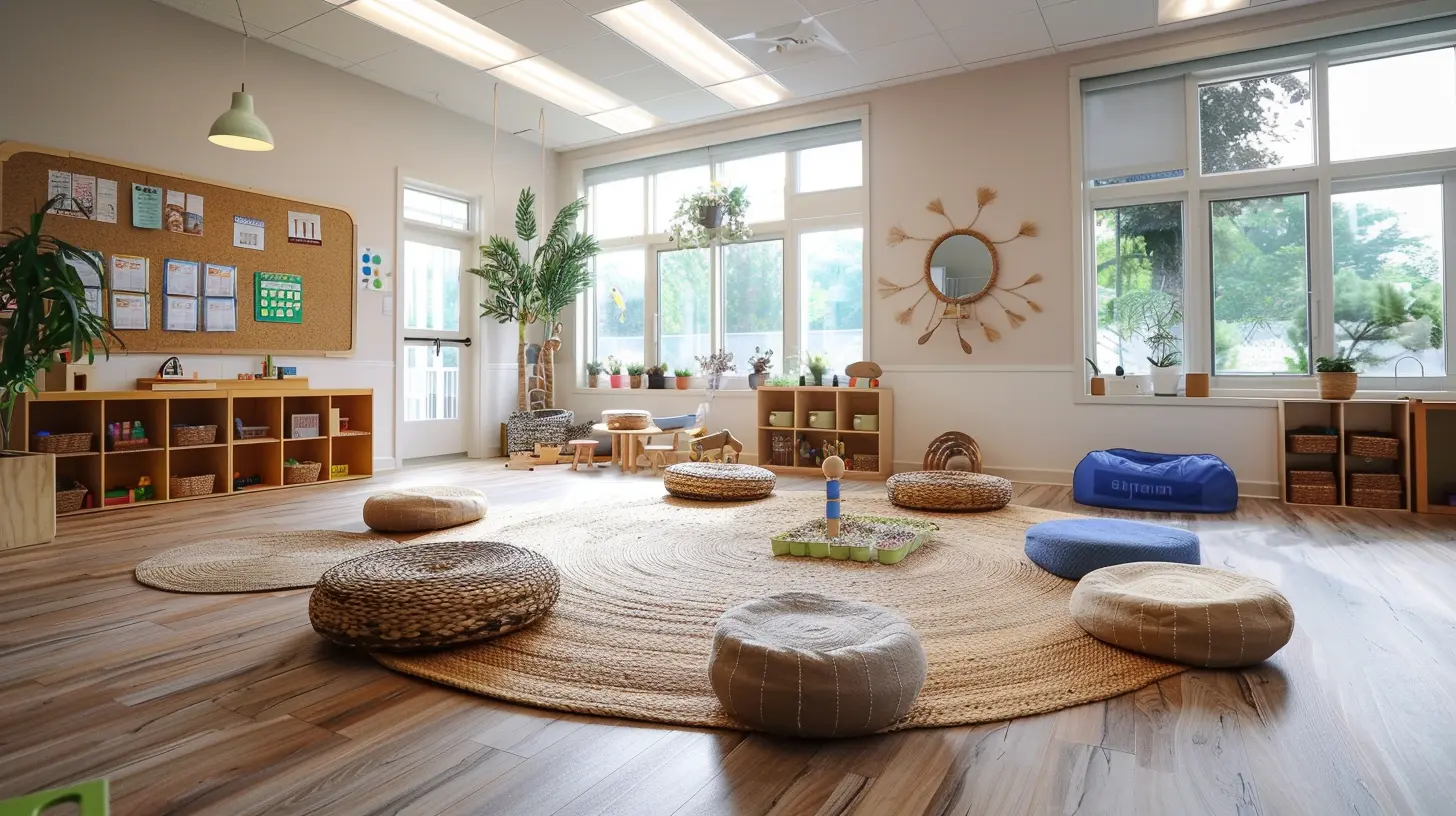
The Sandpaper Letters: A Multi-Sensory Approach to Sounds
Ready for some hands-on learning? Enter the iconic sandpaper letters—a Montessori hallmark.These are wooden boards with letters made from rough sandpaper. Children trace the letters with their fingers while saying the sound each letter makes (not the name!).
Why sandpaper? Because it brings in the sense of touch. When a child traces the letter, they’re not just seeing and hearing it—they’re feeling it. This multisensory approach builds a stronger brain connection and helps the sounds stick.
At this point, children are learning:
- Letter-sound correspondence (phonics)
- Shape and direction of letters
- Correct pronunciation of sounds
And all of this happens before they’ve even tried to write or read a single word.
From Sounds to Words: Blending and Segmenting
Once a child has built up a solid bank of letter sounds, they’re ready to start blending—putting sounds together to form words.In Montessori classrooms, this looks like:
- Using Moveable Alphabets to build words
- Practicing CVC words (that’s consonant-vowel-consonant like “cat” or “dog”)
- Reinforcing sound blending through games and repetition
It’s like turning ingredients into a recipe—children mix and match phonetic sounds to “cook up” real words.
At the same time, they learn to segment, or break a word down into its component sounds. For example, hearing "pig" and identifying /p/ /i/ /g/.
Together, blending and segmenting pave the way for real reading.
Writing Before Reading? Yep, That’s Montessori!
This might surprise you—Montessori kids often start writing before they start reading.Wait... isn't that backwards?
Not really. Remember that writing in the Montessori method means encoding (putting sounds together to form written words), while reading is decoding (recognizing written words and understanding them).
With tools like the Moveable Alphabet, children use what they’ve learned about letter sounds to build words that express their thoughts—even before they can read those words back!
It’s like giving them freedom to speak through a new medium. And once they’re writing, reading tends to follow naturally.
Reading Takes Off: Phonetic First, Then Sight Words
So how do Montessori children actually learn to read? Slowly, steadily, and in a very logical progression.Here’s how it unfolds:
1. Phonetic Reading – Starting with words that follow simple phonetic rules: map, dog, sit, etc.
2. Phonograms and Digraphs – Learning about combinations like "sh", "ch", or "ee".
3. Sight Words – Words that don’t follow regular phonetic rules (like “the” or “said”) are introduced later.
4. Reading with Comprehension – Children begin reading sentences, then short books, and eventually fluent reading with deeper understanding.
Montessori materials support each of these stages:
- Object boxes and word cards to match words with objects
- Reading folders to group phonograms
- Booklets specifically designed to match the child’s reading level
There’s no rush. The goal is fluency, not speed. And because the foundation is so strong, most Montessori students become confident readers without ever feeling overwhelmed.
The Importance of a Language-Rich Environment
None of this happens in isolation. Montessori classrooms are language-rich environments, where every element encourages communication, expression, and discovery.Things you’ll find in a Montessori classroom:
- Carefully chosen books and story baskets
- Labels on objects around the classroom
- Vocabulary-building activities
- Conversations between peers and teachers
Children are constantly invited to engage with language—whether they're asking questions, describing their work, or listening to stories at circle time.
The Role of the Adult
Here’s a fun paradox in Montessori: the teacher (or “guide”) often does less so the child can do more. But when it comes to language, the guide plays a crucial role.They:
- Model precise, rich vocabulary
- Offer stories and books that match the child’s interests
- Introduce materials in a clear, sequential way
- Observe each child’s progress and gently guide them to the next level
It's a delicate dance—knowing when to step in, and when to step back.
Think of the Montessori guide as a backstage coach while the child takes center stage in their learning journey.
Supporting Language at Home
If you’re a parent, you might be wondering, “How can I support this at home?”Here are a few Montessori-inspired tips:
- Read aloud every day—even if it’s just 10 minutes
- Use real words with your child (avoid dumbing things down)
- Encourage storytelling and conversations
- Provide materials like sandpaper letters or moveable alphabets
- Create a quiet space for reading and writing
Most importantly, be patient. Language development isn’t a race—it’s a spiral. Children revisit and reinforce concepts over time, each time with more depth and confidence.
Wrapping Up: From Phonetics to Fluent Reading, Montessori Nails It
The Montessori language curriculum is one of the most elegant parts of the method. It's rooted in how children naturally develop language—and it respects their pace and individual journey.By starting with sounds, moving through writing, and finally arriving at fluent reading, Montessori crafts a sequence that’s both logical and magical.
And let’s not forget—this curriculum does more than teach reading. It helps children express themselves, think critically, and connect deeply with the world around them. That’s the real power of language. And in Montessori, it's given the attention and care it truly deserves.
all images in this post were generated using AI tools
Category:
Montessori EducationAuthor:

Charlotte Rogers
Discussion
rate this article
3 comments
Morgan Jimenez
I’m intrigued by the Montessori approach to language education! It's fascinating how phonetics lays the groundwork for fluent reading. I’d love to learn more about the specific activities and materials used at different stages. How do they adapt to individual learning styles? Great insights in this article!
June 9, 2026 at 11:25 AM
Charlotte Rogers
Thank you! I'm glad you found the article insightful. In Montessori, we use activities like sandpaper letters and phoneticObject boxes to cater to different learning styles, allowing children to explore language through hands-on materials and tailored activities. Let me know if you’d like more details!
Beatrice McLaurin
What a delightful exploration of Montessori’s language curriculum! It’s inspiring to see how phonetics seamlessly pave the way to fluent reading, nurturing a love for language in children. Great insights for educators and parents alike!
May 25, 2026 at 8:33 PM
Charlotte Rogers
Thank you for your kind words! I'm glad you found the insights valuable for fostering a love of language in children.
Zevon Adkins
Montessori's approach nurtures a love for language, fostering both phonetic skills and a passion for reading.
May 24, 2026 at 4:22 AM
Charlotte Rogers
Thank you! Montessori's hands-on approach truly cultivates a lifelong love for language and reading.