How Montessori Encourages a Lifelong Love of Learning
2 January 2026
Have you ever watched a child so deeply engaged in play that time seems to melt away? They’re not just playing—they’re learning. That’s the magic of curiosity in action. And that’s precisely the kind of learning the Montessori method nurtures. It taps into a child’s natural thirst for knowledge and turns it into a love affair with learning that can last a lifetime.
Sounds impressive, right? Well, it is. The Montessori method is more than just an alternative style of education. It’s a transformative experience designed to develop not only academic skills but also independence, confidence, and a genuine love for learning.
In this article, we’re going to dig deep into how Montessori education lays the foundation for children to become lifelong learners. So, whether you’re a parent considering Montessori for your child, an educator seeking inspiration, or just someone curious about innovative education methods, stick around. You’ll walk away with insights that may just change the way you think about learning.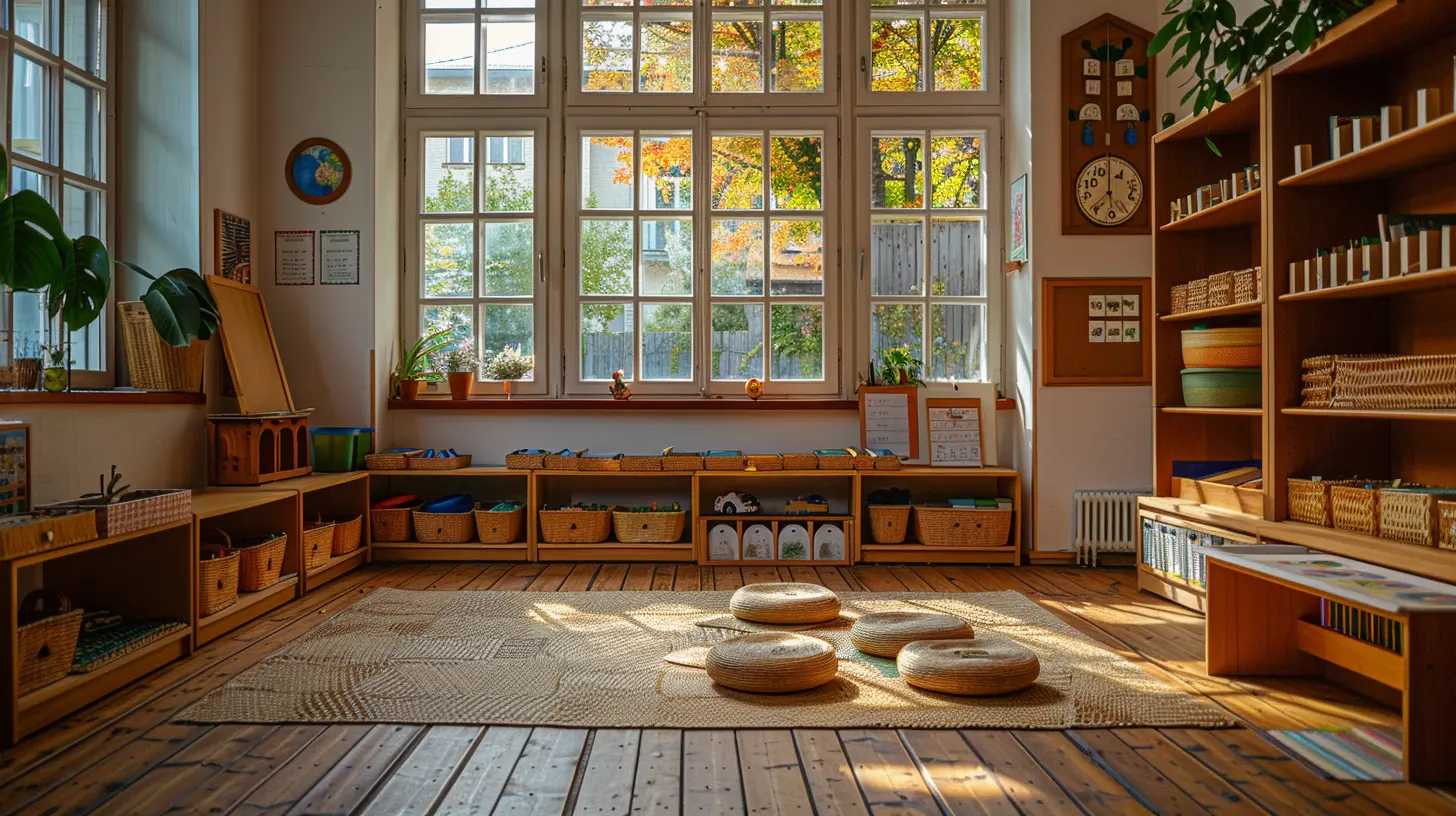
What Is Montessori Education, Really?
Let’s kick things off with the basics. What exactly is Montessori education?Developed by Dr. Maria Montessori over a century ago, the Montessori approach is a child-centered educational method that emphasizes hands-on, self-directed learning. It's grounded in the belief that children are naturally curious and capable of initiating learning in a thoughtfully prepared environment.
So instead of a teacher standing at the front of the room dictating every move, Montessori classrooms put the child in the driver’s seat. Teachers act more like guides or facilitators, gently steering when needed but allowing kids to explore based on their own interests and pace.
The Science Behind "Loving to Learn"
Before we dive into the Montessori-specific stuff, let’s talk about the concept of a “lifelong love of learning.”Why is this even important?
When kids love to learn, they’re more likely to...
- Be self-motivated
- Seek out new knowledge
- Adapt to new challenges
- Remain resilient in the face of failure
In today’s fast-changing world, these qualities are absolute gold. It’s not just about acing a test anymore; it’s about knowing how to learn, unlearn, and relearn. And guess what? Montessori education nails this.
So how does it work its magic? Let’s break it down step by step.
1. Freedom Within Limits
Montessori classrooms are famous for offering children choices. But hold up—it’s not a free-for-all.Kids can choose what they work on, but within carefully set boundaries. This sense of autonomy builds responsibility and confidence. When children feel ownership of their learning, they tend to engage more deeply and stick with tasks longer.
Think about it: Would you rather be forced to read a book or choose one that interests you? That sense of control over your learning journey changes everything.
2. A Prepared Environment That Sparks Curiosity
Montessori classrooms aren’t your typical spaces filled with posters and plastic toys. They’re calm, organized, inviting, and full of high-quality materials that are specifically designed to appeal to children’s senses and developmental stages.The environment itself becomes a teacher.
Materials are arranged on low shelves, everything has its place, and activities are designed so that children can correct their own mistakes. That means no one’s hovering to say “wrong again.” Instead, kids learn to trust themselves.
This setup fuels natural curiosity and promotes exploration. And when children are curious, learning comes naturally.
3. Learning by Doing (a.k.a. Hands-On Learning)
Ever meet someone who “just has to see it or do it” to understand something? That’s because hands-on learning sticks.In a Montessori classroom, you won’t find rows of desks. Instead, you’ll see kids on rugs, at tables, or even working on the floor with tactile materials like beads, puzzles, or sandpaper letters.
These aren’t just toys—they’re tools that help kids grasp complex concepts through touch, movement, and trial and error. It’s learning by doing, which not only solidifies knowledge but also makes it way more fun and engaging.
4. Multi-Age Classrooms Encourage Mentorship and Empathy
Here's a little-known gem about Montessori: the classrooms are mixed-age, typically spanning three years. So a class might have 3, 4, and 5-year-olds learning side by side.At first glance, this might seem chaotic. But in reality, it’s genius.
The younger kids look up to the older ones, and the older kids re-enforce their knowledge by helping the younger ones. This dynamic builds leadership, patience, and empathy—all while reinforcing academic skills.
Think of it like a family: everyone has a role, and older siblings naturally guide the younger ones. It’s learning in a community, not in isolation.
5. Teachers as Guides, Not Bosses
In traditional education, the teacher is the star of the show. But in Montessori, they take on more of a backstage role.Montessori teachers (often called guides) are trained to observe, rather than instruct. They carefully watch each child to understand their interests, strengths, and challenges, then offer gentle guidance or introduce new materials at just the right time.
When you’re not constantly being told what to do next, you begin to listen to your own inner drive. That’s how intrinsic motivation—true, lasting motivation—is born.
6. Mastery Over Memorization
Quick question: Do you remember the capital of Bolivia? Maybe, maybe not.That's because memorization often fades over time. Montessori education focuses on mastery—really understanding a concept—rather than memorizing facts for a test.
Children work on topics until they’ve truly grasped them, not until a test date rolls around. There’s no “teaching to the test” here. The goal is long-term understanding, not short-term performance.
And when kids fully understand what they’re learning, they’re more likely to enjoy it. Knowledge becomes useful, not just something to regurgitate.
7. Encouraging Intrinsic Motivation
Here’s a big one: Montessori doesn’t rely on external rewards like gold stars, grades, or prizes. Instead, the reward is the joy of learning itself.Sound idealistic? Maybe. But it works.
When kids are praised for effort, not just results, they begin to value the process over the product. This helps them develop a growth mindset—the belief that abilities can be developed through effort—which is key to loving learning for the long haul.
Montessori kids learn that it’s okay to make mistakes, that effort matters, and that they’re capable of figuring things out. That kind of confidence is priceless.
8. Encouraging Real-World Skills and Independence
Montessori doesn’t just focus on academic learning. Practical life skills are a huge part of the curriculum too.Children might learn how to tie their shoes, prepare a snack, or sweep the floor. At first glance, you might think, “What does that have to do with education?”
But these tasks build independence, attention to detail, and a sense of competence. When kids feel successful in everyday tasks, they’re more confident tackling academic challenges too.
Life skills = confidence = willingness to learn. It’s all connected.
9. Personalized Learning Paths
Every child is unique. So why should every child follow the same curriculum at the same pace?Montessori acknowledges that children develop at different rates and have different interests. That’s why there’s no “one-size-fits-all” learning plan.
Rather than trying to fit every child into a mold, Montessori lets the learning mold itself to each child.
This flexibility makes learning more relevant and engaging. Kids aren’t just going through the motions—they’re pursuing knowledge that actually excites them.
10. A Strong Foundation for Future Learning
What happens to Montessori kids when they move on to traditional schools or higher education? Do they struggle? Actually, the opposite is often true.Because they’ve developed a love for learning, self-discipline, and critical thinking skills, they’re often better prepared to handle new challenges.
Montessori isn’t just about early education. It’s about setting the stage for a lifetime of asking good questions, seeking answers, and staying curious about the world.
So, Is Montessori Right for Every Child?
Great question. And here’s the honest answer: Montessori works beautifully for many children, but like any educational method, it’s not a perfect fit for everyone.Some children might thrive in a more structured environment, while others blossom in the freedom Montessori provides.
What’s more important is understanding your child’s needs, personality, and learning style. But if your goal is to raise a curious, confident, independent learner—Montessori is definitely worth considering.
Final Thoughts: It’s a Love Story
At its core, Montessori education isn’t just about teaching—it’s about nurturing a relationship between the child and learning. It’s about creating that spark, that moment of “Wow, I get it!”, and making sure it never fades.It’s not always quick or flashy. But it’s deep, meaningful, and lasting.
So when we talk about how Montessori encourages a lifelong love of learning, what we’re really talking about is helping children fall in love with the process—mistakes and all.
And once they’re in love with learning? The possibilities are endless.
all images in this post were generated using AI tools
Category:
Montessori EducationAuthor:

Charlotte Rogers
Discussion
rate this article
12 comments
Brooke McSweeney
Unlock the secrets of curiosity: Montessori methods may hold the key to endless exploration.
February 4, 2026 at 4:36 AM
Charlotte Rogers
Absolutely! Montessori methods nurture curiosity by fostering independence and encouraging exploration, making learning a joyful and lifelong journey.
Zina Morales
Montessori: where kids learn to love learning, not just because of the snacks, but because they realize that naps and playtime are just as educational!
February 3, 2026 at 12:44 PM
Charlotte Rogers
Absolutely! Montessori emphasizes holistic learning, where play and rest are integral to education, fostering genuine curiosity and a passion for discovery.
Shelby Dillon
Montessori magic transforms education into an adventure! 🌟 With hands-on exploration and child-driven discovery, learning becomes a delightful journey rather than a chore. It’s like giving kids a treasure map to knowledge, where curiosity is the compass! Here’s to lifelong learners and their exciting quests ahead!" 🗺️✨
January 30, 2026 at 1:26 PM
Charlotte Rogers
Absolutely! Montessori fosters a sense of adventure in learning, empowering children to explore and discover at their own pace, igniting a lifelong passion for knowledge. 🌟🗺️✨
Lennox Carter
Unlock your curiosity, embrace learning!
January 26, 2026 at 7:51 PM
Charlotte Rogers
Thank you! Embracing curiosity is key to fostering a love of learning, and Montessori education beautifully supports this journey.
Kristen McFadden
Great insights! Montessori truly fosters a love for learning.
January 24, 2026 at 4:15 AM
Charlotte Rogers
Thank you! I'm glad you found the insights valuable. Montessori's approach really does nurture a passion for lifelong learning!
Beatrice McMahan
Inspiring approach to education!
January 23, 2026 at 4:03 AM
Charlotte Rogers
Thank you! I'm glad you find the Montessori approach inspiring!
Levi McEvoy
Montessori’s unique approach transforms curiosity into a lifelong quest for knowledge and growth.
January 22, 2026 at 4:45 AM
Charlotte Rogers
Thank you! Montessori truly nurtures curiosity and fosters a deep love for learning that lasts a lifetime.
Amalia McKinney
Thank you for this insightful article on Montessori education! It beautifully highlights how fostering independence and curiosity can nurture a lifelong love of learning in children. I appreciate the emphasis on creating an engaging environment that respects each child's unique pace and interests. Looking forward to implementing these ideas in my own practice!
January 15, 2026 at 5:14 AM
Charlotte Rogers
Thank you for your kind words! I’m glad you found the article helpful and inspiring for your practice. Happy implementing!
Soliel Banks
Embracing the Montessori philosophy transforms education into an adventure! By fostering curiosity and independence, it cultivates a passion for learning that lasts a lifetime. Let’s empower the next generation to explore, discover, and thrive in their unique journeys!
January 12, 2026 at 9:58 PM
Charlotte Rogers
Thank you for your insightful comment! Embracing the Montessori philosophy truly ignites a lifelong passion for learning, enabling children to thrive as curious and independent individuals.
Elizabeth West
Montessori education fosters a deep-rooted enthusiasm for learning by emphasizing self-directed exploration and hands-on experiences. By respecting children's individual interests and encouraging critical thinking, this approach nurtures intrinsic motivation, allowing learners to develop curiosity and resilience. Consequently, Montessori cultivates adaptive, lifelong learners who thrive in diverse environments.
January 12, 2026 at 5:18 PM
Charlotte Rogers
Thank you for your insightful comment! You've beautifully captured how Montessori education fosters curiosity and resilience, paving the way for lifelong learning. I appreciate your perspective!
Craig McLean
In Montessori's tender embrace, curiosity blooms; A journey of joy ignites, Fostering flames of lifelong learning, Where minds forever soar.
January 9, 2026 at 11:58 AM
Charlotte Rogers
Thank you for beautifully capturing the essence of Montessori! It truly nurtures curiosity and ignites a passion for lifelong learning in every child.
Mindy Williams
This article beautifully captures the essence of Montessori education. By fostering independence and curiosity, it truly inspires children to embrace learning as a joyful, lifelong journey. Thank you for sharing these insights!
January 7, 2026 at 4:19 AM
Charlotte Rogers
Thank you for your thoughtful comment! I'm glad you resonated with the essence of Montessori education.
MORE POSTS

How to Analyze Your Practice Test Results for Maximum Improvement

Empowering Students with Choice: How to Differentiate by Interest

Mindfulness for Test Preparation: A Holistic Approach

How Music Education Can Help with ADHD

How to Identify and Improve Your Weak Areas for Standardized Tests
How to Build a Mindfulness Practice as a School Community

Differentiating Assessment for Diverse Learners

How to Create Flexible Lesson Plans for Hybrid and Remote Learning